
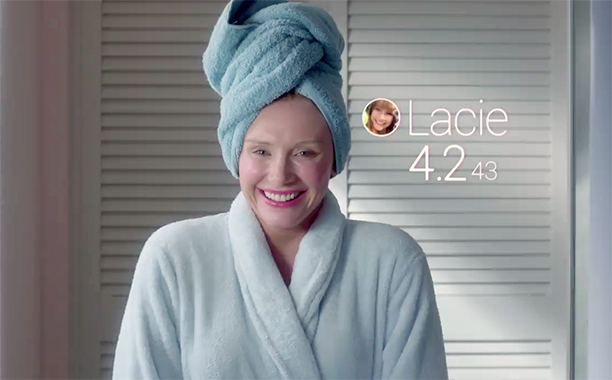
Black Mirror has everyone’s attention due to how it might possibly portray our future for technologies and societies all over the world. In the first episode of the third season, “Nosedive”, it shows a society that relies on a social rating. At first, this reminded me of someone rating a service such as, an Airbnb apartment rental, a Yelp review for a Thai restaurant or a hair salon. Every citizen has a lens that allows them to see another person’s rating and how those ratings effect the score in their real lives. In the episode, the characters post their daily activities, food, pets, and experiences all online to be all rated, liked, and even rate experiences with people!
Nosedive’s as a whole is shown to represent the significant impact social media has on people’s relationships and reputations in our generation. Our “ratings” show how obsessed we have with our views on social media and how we overall portray ourselves for our followers to see. Rather than living to be yourself and please yourself as a person, people are living to just simply please others. The main character, Lacie was very determined to please her friends and those around her, and to receive only high ratings for her life. Suddenly, Lacie’s rating started to decline and started facing multiple unfortunate experiences because she got so used to only depending on other people’s expectations and wants.
If social credit systems are actually becoming a reality pictured in Black Mirror, social media would play a major role. The ratings the character’s use with their phones shows that with social media, everything they do effects our friends, our home life, cars, schools, which places we can or cannot enter. It possibly can relate to how as a society, we are used to only posting photos on social media that makes us look good, and whatever we post, can effect our outside life, social life, friends, etc. On Instagram, people have the abilities to like or to not like posts, rate restaurants, hotels, areas based on that 5 star scale which can determine a person’s place. For example, an idea we all have sometimes is, a person who drives a Range Rover, lives in a multi-million dollar home neighborhood, and wears designer clothes, will look for restaurants or vacation spots on Trip Advisor and be searching for that top “5 Star” rating. Back when social media did not exist, there was no options to place our judgments anywhere. It is human nature to judge others around our spheres, but it is not public unless we place our thoughts out there. Nosedive just shows viewers the impact the judgments online have on others and how other people perceive a person for how they are entirely just based on what they post.
Nowdays, if a person is talking about someone else, the other people is most likely to say, “Show me him/her” and the person will immediately pull up their Instagram page, instead of saying how they are inside. People like to perceive someone’s life and them just through a small Instagram glimpse.
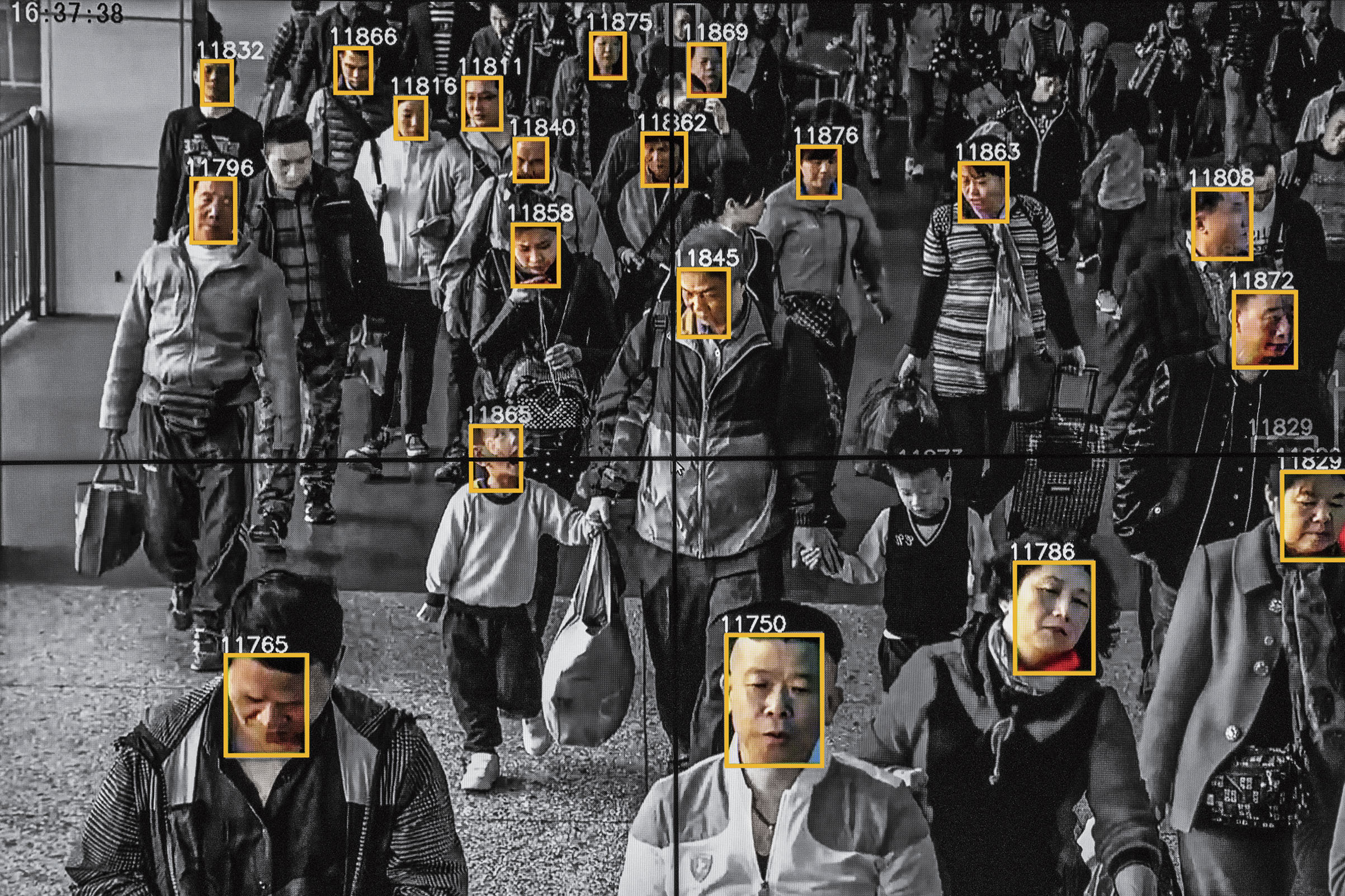
This relates to China, how the social credit scores are now taking ahold where citizens earn certain scores for actions. Newsweek reported about the social credit score saying, “Under the system, the elite will gain access to better social privileges and those who rank closer to the bottom will effectively be second-class citizens” (Nittle). For example, they earn scores for how often they get tickets, default on loans, or just break other forms of trust or rules in a society. If you break too many rules in your community, you could have limits of accessing certain things other people can. The Chinese government policy states, “It will forge a public opinion environment where keeping trust is glorious. It will strengthen sincerity in government affairs, commercial sincerity, social sincerity, and the construction of judicial credibility” (Botsman). China is a very collective society, therefore they value trust as a whole and want everyone confined together. Instead of a five-star scale, Individuals on Sesame Credit are measured on a scale from 350 to 950 points based on their credit history, fulfillment capacity, and personal characteristics. For example, if you do not pay your phone bill on time, fulfill your “contract” obligations or verify your own address your own score will be affected in many ways. Also, if you interact well with people, display a positive energy online through chatting, send nice messages to your friends, and talk well about the Chinese government, your score will go drastically up! With low ratings, will come slower internet speeds, restricted access to certain restaurants or bars, clubs, sports facilities, less of a likelihood hood for employment, private elite schooling, restricted travel, and ability for social-security benefits or insurance. Relating China back to Nosedive, Lacie experienced a travel restriction when she arrived to the airport, missed her flight which caused her rating to drop below a 4.2, which would the minimum for a new ticket to purchase. Then, she realized how she cannot get another flight, argues with airport staff, security, and cannot even rent a car to drive to her friend’s wedding.
Relating some of these issues to the digital revolution of privacy, surveillance, and the overall dark side of social web, is how much data is being collected for Chinese citizens with almost little to no protection, or algorithmic reasoning about how the information for people is analyzed to show a score. Here, people have absolutely no privacy with being deducted for their moves such as, traffic violations, but adding points for donations and other good deeds. Also, China has advanced facial recognition systems, can follow people across entire cities, and even track down professionals. For instance, officials from China worked with BBC News to show how they had the ability of finding one reporter within seven minutes with their every movements being monitored.
This youtube video, gives viewers a look inside China’s social credit system and visually shows people a real woman’s experience now with her ratings.
Botsman, Rachel. “Big Data Meets Big Brother as China Moves to Rate Its Citizens.” WIRED. WIRED UK, January 21, 2019. https://www.wired.co.uk/article/chinese-government-social-credit-score-privacy-invasion.
Nittle, Nadra. “Spend ‘Frivolously’ and Be Penalized under China’s New Social Credit System.” Vox. Vox Media, November 2, 2018. https://www.vox.com/the-goods/2018/11/2/18057450/china-social-credit-score-spend-frivolously-video-games.
 Social Media Maisy